.png)
ICBC Active Rehab: How Kinesiology Supports Full Recovery After a Car Accident

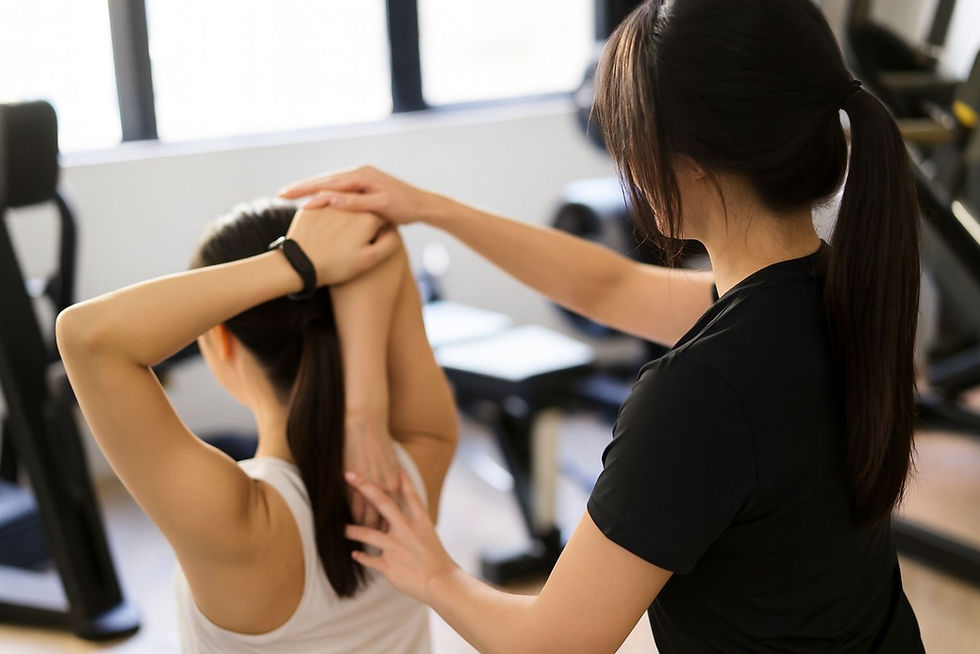
Recovering from a motor vehicle accident can feel overwhelming — physically, mentally, and emotionally. Even minor collisions can lead to lingering pain, stiffness, and a loss of confidence in movement. While many people begin their recovery with chiropractic care, massage therapy, or physiotherapy, one of the most essential (yet often overlooked) components of long-term healing is Active Rehabilitation with a Registered Kinesiologist.
Kinesiology focuses on movement science — how your body moves, compensates, weakens, and recovers. It plays a crucial role in rebuilding strength, restoring mobility, and preventing long-term complications that passive treatments alone cannot fully address. For ICBC claims, Active Rehab is not just an optional add-on; it is a structured pathway designed to help patients return to their daily activities safely and confidently.
Movement as Medicine After a Car Accident

After an accident, it is common for patients to feel pain, stiffness, or weakness that persists long after the initial injury. This happens because the body adopts compensation patterns — using the wrong muscles to protect painful areas — which can eventually lead to chronic discomfort or re-injury.
Kinesiologists use movement analysis to understand how the body has changed post-accident. They identify areas of instability, muscle imbalances, and limited mobility that may not be obvious in a standard assessment. Once these patterns are understood, the Kinesiologist guides patients through targeted exercises to correct movement, stabilize joints, and retrain proper biomechanics.
This is why kinesiology is considered “movement as medicine.” The right exercises, performed consistently, help decrease pain, improve circulation, enhance mobility, and strengthen the body to prevent future injuries.
What to Expect During Your ICBC Active Rehab Program

An ICBC-funded Active Rehab program is structured, progressive, and fully personalized. It typically begins with a comprehensive assessment, where the Kinesiologist evaluates posture, mobility, muscular strength, functional movement, and areas of compensation. This initial stage helps establish a clear baseline and guides the direction of your rehab plan.
Patients then begin a customized exercise program tailored to their needs. This may include:
Mobility and range-of-motion exercises
Strengthening for stabilizing muscles
Posture correction and ergonomic strategies
Balance and coordination training
Functional movement retraining (lifting, reaching, walking, etc.)
Education on safe movement to prevent flare-ups
Sessions are active, engaging, and focused on rebuilding confidence in daily tasks. Over time, exercises become more challenging as your strength and mobility improve. The ultimate goal is to help you return to work, sports, and daily life without fear of pain or re-injury.
Because ICBC Active Rehab is typically covered for patients injured in a motor vehicle accident, most individuals can begin treatment without financial barriers — making it easier to focus on healing.
Why Active Rehab Complements Chiropractic, Physiotherapy, and Massage

While passive therapies like chiropractic adjustments, physiotherapy manual work, and RMT help decrease pain and address tissue restrictions, they do not fully retrain movement patterns on their own.
That’s where kinesiology becomes essential.
Passive treatments:
Reduce pain
Improve joint mobility
Release muscle tension
Support acute recovery
Active rehabilitation:
Strengthens weakened muscles
Corrects faulty movement patterns
Improves stability and coordination
Helps prevent future injury
Builds long-term resilience
When combined, these approaches create a powerful, complete recovery system. Many patients feel temporary relief after passive therapy, but long-term healing comes from building strength, stability, and proper movement — all of which kinesiology provides.
Kinesiology vs. Physiotherapy: Working Together for Better Results

Physiotherapy and kinesiology often work hand-in-hand, but they serve different purposes. Physiotherapists specialize in diagnosing injuries, providing manual therapy, and addressing acute stages of recovery. Kinesiologists focus on the active stage — using exercise and movement retraining to fully restore function.
Patients recover best when both disciplines collaborate. ICBC recognizes this and often includes both Physio and Active Rehab in treatment plans because together, they accelerate healing and reduce the risk of chronic pain.
The Importance of Active Rehab for Long-Term Recovery

Without exercise-based rehabilitation, many patients experience recurring pain long after the initial injury seems “healed.” Weakness, instability, and poor biomechanics can linger, making everyday tasks harder and increasing the likelihood of future injuries.
Active Rehab empowers patients with:
Stronger, more stable muscles
Better posture and alignment
Improved balance and coordination
Increased body awareness
Confidence in movement
A reduced risk of re-injury
Most importantly, movement helps patients regain independence — returning to work, fitness routines, and normal daily life with fewer limitations.
Complete Recovery Happens When Movement and Treatment Work Together

At Naosu Wellness Coquitlam, we believe the best recovery happens when multiple disciplines support one goal: helping you move and feel better. While kinesiology builds strength and restores proper movement, other therapies address essential parts of healing:
Chiropractic care improves alignment and nervous system function.
Physiotherapy supports injury diagnosis, manual therapy, and guided rehabilitation.
Registered Massage Therapy reduces muscle tension and improves circulation.
Acupuncture decreases pain, inflammation, and stress.
When combined with Kinesiology Active Rehab, these treatments create a holistic, powerful recovery plan that helps patients not only heal — but thrive.
If you’ve been in a car accident, you don’t have to navigate recovery alone. A structured ICBC Active Rehab program can help you regain strength, correct movement, prevent chronic pain, and get back to the life you love.


Comments